Astrophotography has long fascinated stargazers, but traditional telescopes often require complex setup, precise alignment, and expensive imaging equipment to capture the night sky’s beauty. Enter the era of the best smart telescopes for Astrophotography.
Devices that combine optics, digital sensors, motorized mounts, and intuitive apps to make observing and imaging celestial objects easier than ever.
From beginner-friendly models like the ZWO Seestar S30 to advanced scopes like the Unistellar Odyssey Pro, smart telescopes automate alignment, object tracking, and live stacking, allowing you to capture stunning images of galaxies, nebulae, star clusters, and planets with minimal effort.
In this guide, we compare four of the best smart telescopes on the market today: Unistellar Odyssey Pro, Unistellar eQuinox 2, ZWO Seestar S50, and ZWO Seestar S30, highlighting their features, specifications, pros, cons, and ideal users.
Whether you’re a casual stargazer, aspiring astrophotographer, or seasoned observer, this guide will help you choose the perfect telescope for your night sky adventures.
“This post contains affiliate links. If you purchase through these links, I may earn a small commission at no extra cost. Learn more here.”
| 1) Unistellar Odyssey Pro Smart Telescope | 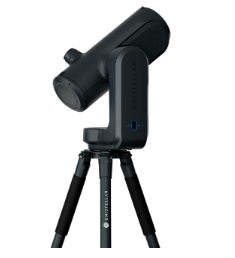 |
|
| 2) Unistellar eQuinox 2 Smart Telescope | 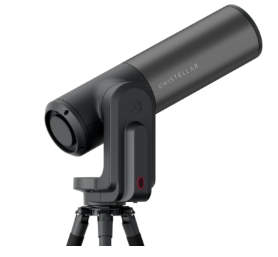 |
|
| 3) ZWO Seestar S50 Smart Telescope | 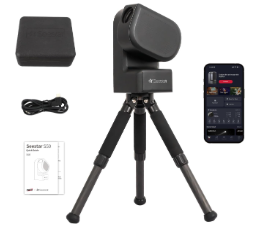 |
|
| 4) ZWO Seestar S30 Smart Telescope | 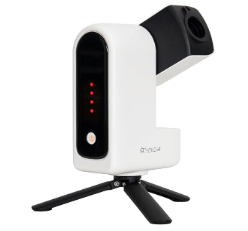 |
What Is a Smart Telescope?
A smart telescope is a modernized automated telescope, which is intended to make life easier when stargazing and capturing photographs of astro space.
Smart telescopes are designed with motorized mounts, digital camera sensors, and controls using applications built in rather than manually aligned and tracked, and using separate cameras as in the case of traditional telescopes.
The telescope allows users to point the device using a smartphone or tablet, choose the celestial object from a built-in library, and allow the telescope to slew, point, and track the target automatically.
Some intelligent telescopes are additionally provided with live stacking, noise reduction, and light pollution compensation, making even novices able to obtain clear images of deep sky objects such as galaxies, nebulae, and star clusters without complex technical configuration.
In principle, a smart telescope integrates astronomical optics, imaging technology, and software automation, and thus, astrophotography and viewing the night sky are more accessible, quicker, and easier to use by novices and amateur astronomers.
Smart Telescope vs Traditional Telescope: Which Is Better for Astrophotography?
When deciding between a smart telescope and a traditional telescope for astrophotography, the best choice depends on your goals, experience level, and how much time you want to invest in learning the craft.
Smart telescopes are designed to simplify astrophotography. They automate alignment, object tracking, focusing, and image stacking through intuitive apps on your smartphone or tablet.
With features like built‑in live stacking, light pollution reduction, and large object libraries, smart telescopes (e.g., Unistellar and ZWO Seestar models) make it easy for beginners and casual users to capture deep‑sky images without complex hardware or technical setup.
This means less time fiddling with mounts, cameras, and software, and more time enjoying results. For many users, especially those in urban areas or just starting out, smart scopes offer the most accessible path to astrophotography.
In contrast, traditional telescopes paired with DSLRs or mirrorless cameras provide greater flexibility and higher potential image quality for serious hobbyists and advanced astrophotographers.
A traditional setup with an equatorial mount and dedicated imaging equipment can capture finer detail and longer exposures, especially for deep‑sky objects.
However, this comes with a steeper learning curve and more gear to manage. Balancing, polar alignment, calibration, guiding, and post‑processing require time and expertise.
Comparison Table: Top Smart Telescopes at a Glance
| Feature | Unistellar Odyssey Pro Smart Telescope | Unistellar eQuinox 2 Smart Telescope | ZWO Seestar S50 Smart Telescope | ZWO Seestar S30 Smart Telescope |
|---|---|---|---|---|
| Optical Design | 85 mm Newtonian reflector | 114 mm Newtonian reflector | 50 mm apochromatic refractor | 30 mm apochromatic refractor |
| Aperture | 85 mm | 114 mm | 50 mm | 30 mm |
| Focal Length / Ratio | 320 mm, f/3.9 | 450 mm, f/3.9 | 250 mm, f/5 | 150 mm, f/5 |
| Image Sensor | ~4.1 MP CMOS | 6.2 MP CMOS | Sony IMX462 (2 MP) | Sony IMX662 STARVIS 2 |
| Field of View | ~33.6 × 45 arcmin | ~34 × 47 arcmin | Wide deep‑sky view | Wide deep‑sky & dual‑lens |
| Mount Type | Motorized Alt‑Az | Motorized Alt‑Az | Alt‑Az GoTo | Alt‑Az GoTo |
| Battery Life | ~5 hrs | ~11 hrs | ~6 hrs | ~6 hrs |
| Internal Storage | 64 GB | 64 GB | 64 GB | 64 GB |
| Weight (approx.) | ~6.5 kg | ~9 kg | ~2.5 kg | ~1.65 kg |
| Best For | Users wanting strong automation + live eyepiece views | Beginners to intermediate astrophotography | Budget‑friendly deep‑sky imaging | Ultra‑portable beginner imaging |
| Key Strength | Digital eyepiece + Deep Dark tech | Long battery + large aperture | Affordable + live stacking | Lightweight + dual‑lens |
| Limitations | Higher price | Heavier, requires app | Lower resolution | Small aperture for deep targets |
| Ideal Skill Level | Intermediate, Advanced | Beginner, Intermediate | Beginner, Casual | Beginner / Casual |
Best Smart Telescopes for Astrophotography
Premium & All-Around Performers
1) Unistellar Odyssey Pro Smart Telescope
The Unistellar Odyssey Pro Smart Telescope is a redefinition of what most individuals would anticipate from consumer astrophotography equipment.
Automated deep-sky photography and guided observing in a smooth and compact form, without the sophistication of the old systems.
Its focal length (f/3.9) 85 mm Newtonian reflector with a high efficiency of light collection, and is conveniently transportable and easy to assemble.
The most notable aspect is the digital eyepiece, developed by Nikon– an OLED micro-display, that allows one to observe directly through the scope and view the live views of celestial objects.
With processed images, this feature has never been seen in the smart scope world, but it has combined the traditional ways of observing with the current imaging visuals.
It plate-solves itself with Smart Star Finder and Deep Dark Technology, and it moves objects on a motorized alt-azimuth mount, and it automatically cuts down on light pollution, which is perfect in urban locations where an observer can not easily drive to a dark, clear location.
Also, its Unistellar app on iOS or Android lets you navigate through its collection of more than 5000 celestial objects, tap to aim, and take light-stacked images without performing any manual alignment or collimation.
Small and reasonably lightweight relative to old Unistellar models, allowing you to get out of the box and into the sky in a few minutes a great jump in the recent technological advancement of astrophotography for beginners.
Key Specifications
- Optical Design: 85 mm Newtonian reflector
- Focal Length & Ratio: 320 mm, f/3.9
- Sensor Resolution: ~4.1 MP CMOS
- Field of View: ~33.6 × 45 arcmin
- Limiting Magnitude: ~17.2
- Mount: Motorized Alt-Azimuth GoTo
- Battery Life: ~5 hours
- Storage: 64 GB internal
- Weight (with tripod): ~6.5 kg
Pros
- Fully automated observing and imaging
- High-quality Nikon digital eyepiece offers immersive views alongside app imagery.
- Deep Dark Technology reduces light pollution in real time, revealing faint deep-sky details even in urban skies.
- Large object database + intuitive mobile app makes exploration simple.
- Portable and relatively lightweight, easier to transport than many smart telescopes.
Cons
- Premium price point, which may be high for casual users
2) Unistellar eQuinox 2 Smart Telescope
The Unistellar eQuinox 2 Smart Telescope is considered to be one of the most affordable and high-powered smart telescopes on the market, which is currently available to allow deep-sky astrophotography to people with no complex device or installation.
In its simplest form, is a combination of a 114 mm reflector optical tube and a 6.2 MP low-light digital camera and onboard image processing enabling users to see detailed images of galaxies, nebulae, and star clusters without the use of a traditional eyepiece or external DSLR camera.
Its operation is entirely operated via apps – as soon as you have the telescope assembled and connected to your iOS or Android gadget via Wi-Fi, you can pick an object out of more than 5,000 astronomical objects and have the telescope automatically slew, position, and point the targets at the night sky.
Also, its Enhanced Vision mode automatically combines multiple short-duration shots in real-time, which replicates the effect of long-duration exposures and decreases the effects of light pollution, by far the largest benefit to the observers in urban and suburban settings.
Designed in its graceful and minimalistic form: there is only one power button, and the alt-azimuth mount is motorized, which does not make you die trying to set it up and operate it, and the internal battery lasts 11 hours, which is enough to watch a film.
Although it does not have a conventional eyepiece (so you only view the sky through the app), this will make astrophotography simpler and the hobby much less technologically demanding for beginners and busy hobbyists alike.
Key Specifications
- Aperture: 114 mm reflector
- Focal Length: 450 mm, f/3.9
- Image Resolution: 6.2 MP sensor
- Field of View: ~34 × 47 arcmin
- Limiting Magnitude: ~18.2
- Mount: Motorized alt-azimuth
- Battery Life: ~11 hours
- Internal Storage: 64 GB
- Weight: ~9 kg (19.8 lbs)
Pros
- User-friendly app control makes astrophotography quick and simple, even for beginners.
- Enhanced Vision light stacking delivers clear images of deep-sky objects, even from light-polluted locations.
- Large celestial database and automatic slewing/tracking streamline the observing experience.
- Long battery life supports extended observation sessions.
- Citizen science integration lets users contribute to real astronomy projects.
Cons
- No traditional eyepiece
Great for Beginners & Mid-Range Users
3) ZWO Seestar S50 Smart Telescope
Astrophotography: The ZWO Seestar S50 Smart Telescope has gained a following in the astrophotography market by making the technology of the smart telescope affordable, easy-to-use, and with surprisingly good image capability at its price point.
The S50A is a digital, motorized, apochromatic triplet S50 Smart Telescope that combines all -in-one, which includes a digital camera, motorized telescope mount, and all-in-one optics of traditional eyepieces and the complex setup of a conventional telescope.
Has an aperture of 50 mm and a focal length of 250 mm, which is f/5, giving an all-encompassing field of view, which is suitable when observing bright deep-sky targets such as nebulae, star clusters, and galaxies.
The onboard Sony IMX462 sensor has the capability of image analysis, at a resolution of 1920 x 1080 (2 MP), and the telescope has the live stacking features, which continuously increase the details as time goes by as the telescope accumulates several short images.
It is an alt-azimuth system that automatically slews and tracks heavenly objects at your choice in the Seestar App, which also has a virtual sky atlas and an in-built object library.
Key strengths are portability and simplicity: the weight of the S50 will not exceed about 2.5 kg, and the integrated rechargeable battery has a 6000 mAh capacity, lasting up to approximately 6 hours with a charge, making the S50 portable and simple to set up for surprise observing.
Also features inbuilt light pollution filters and an optional solar filter to further increase its application in night and day landscapes.
Although it is not an expensive astrophotography setup, the Seestar S50 is sold to novices, amateur image makers, and cost-conscious producers who would wish to have a system that delivers quality results with minimum technical expertise.
Key Specifications
- Optical Design: Apochromatic triplet refractor
- Aperture: 50 mm (2″)
- Focal Length & Ratio: 250 mm at f/5
- Sensor: Sony IMX462 (1920 × 1080, 2 MP)
- Internal Storage: 64 GB
- Mount: Alt-azimuth GoTo tracking
- Battery: Rechargeable built-in ~6000 mAh (~6 hrs)
- Connectivity: Wi-Fi / Bluetooth / USB-C
- Weight: ~2.5 kg
Pros
- Excellent value for the price
- Easy setup and intuitive app control with a built-in sky atlas and automated tracking.
- Live stacking enhances images of deep-sky objects even under light-polluted skies.
- Lightweight and portable, suitable for travel or quick deployment.
- Solar and lunar imaging capabilities with included filters.
Cons
- Low 2 MP resolution limits fine detail, especially on smaller or distant targets.
4) ZWO Seestar S30 Smart Telescope
The ZWO Seestar S30 Smart Telescope is intended to be affordable, portable, and fun to use in astrophotography, particularly by inexpensive beginners or amateurs.
It has a 30 mm apochromatic triplet refractor with an f/5 focal ratio, which gives it a large field of view that is excellent for making broad deep sky targets such as nebulae and star clusters without using heavy telescopes.
Optical system incorporates ED (extra-low dispersion) glass with a Sony STARVIS 2 IMX662 sensor, which has high sensitivity and low noise, which is required in detail-rich astrophotography even under light-polluted skies.
Fully controlled in the smartphone through the Seestar app, which allows it to automatically slay, track objects, live stack, and intelligently reduce noise.
After selecting targets, users will observe the S30 construct sharp astrophotos over time with real-time AI sharpening. It has even got a dual-lens design: wide-angle framing of scenes and a telephoto lens focused on celestial objects being observed closer.
The main advantage is portability in that the S30 only weighs about 1.65 kg (3.6 lb) and can be packed into a backpack and transported around or used in a backyard at any time.
An inbuilt battery of 6000 mAh gives the phone a working time of about 6 hours and an internal memory of 64 GB, where your captures are kept waiting to be downloaded or shared.
Key Specifications
- Optical Design: Apochromatic triplet refractor
- Aperture: 30 mm
- Focal Length & Ratio: 150 mm, f/5
- Sensor: Sony IMX662 STARVIS 2
- Image Resolution: 1920 × 1080 (telephoto & wide)
- Mount: Alt-azimuth GoTo
- Battery: 6000 mAh (~6 hrs)
- Storage: 64 GB internal
- Weight: ~1.65 kg (3.6 lb)
Pros
- Highly portable and lightweight, ideal for travel or quick setup.
- Affordable smart telescope with great deep-sky imaging features.
- Dual-lens system for wide and telephoto capture.
- Built-in filters plus AI noise reduction enhance image clarity.
- Easy app-based control with automated tracking and live stacking simplifies astrophotography.
Cons
- Small aperture limits deep-sky reach compared with larger telescopes.
Factors to Consider when Choosing The Best Smart Telescopes for Astrophotography
Choosing the best smart telescope for astrophotography depends on several important factors that directly affect image quality, ease of use, portability, and overall value.
Aperture size is one of the most significant aspects, and it defines the amount of light that can be collected by the telescope.
The larger apertures of the Unistellar eQuinox 2 Smart Telescope, e.g., 114 mm reflector, allow more detail to be seen in faint galaxies and nebulae than small telescopes such as the 30 mm refractor of the ZWO Seestar S30 Smart Telescope. When deep-sky imaging is the most important, a larger aperture usually has brighter and sharper results.
Another important aspect is related to the resolution and the camera sensor. Sensors with higher resolution have more detailed images, and advanced low-noise sensors are able to work under light-polluted skies.
As an example, the ZWO Seestar S50 Smart Telescope is a relatively inexpensive way to enter the world of smart imaging; however, the resolution is lower than that of the higher-end products.
The type of mounts and the precision of tracking are also important. The majority of the smart telescopes have motorized alt-azimuth mounts that are easy to install but may produce field rotation on longer exposures.
Although the built-in live stacking helps mitigate this problem, more advanced models with high tracking capabilities might be the choice of users who want longer integrations.
Important is also portability and battery life. Small scopes can be used in travel and the backyard, as they are compact and large scopes might have excellent performance but need a larger space where the scope can be set.
The battery life of 511 hours can define the amount of time you are capable of imaging during a single session.
Lastly, consider the soft ecosystem and automation capabilities. Astrophotography can be dramatically simplified with the help of smart object libraries, automatic alignment, live stacking, and light-pollution reduction technologies.
FAQs
- What is a smart telescope?
A smart telescope integrates automated tracking, alignment, and imaging into one device that connects to your smartphone or tablet.
Unlike traditional telescopes that require manual setup and separate cameras, smart telescopes automatically locate celestial targets, capture images, and often process them in real time using live stacking and noise reduction.
- Are smart telescopes good for astrophotography?
Yes, smart telescopes like the Unistellar eQuinox 2 Smart Telescope and ZWO Seestar S50 Smart Telescope make astrophotography accessible to beginners and hobbyists.
While they won’t match the power of a full DSLR rig with equatorial mount, they offer automated imaging, light stacking, and guided tracking that produce impressive deep-sky photos with minimal technical expertise.
- Which smart telescope is best for beginners?
For beginners or casual stargazers, affordable options like the ZWO Seestar S30 Smart Telescope and ZWO Seestar S50 Smart Telescope are excellent choices.
They’re lightweight, easy to set up, and controlled entirely via an intuitive app with built-in object libraries and automated tracking.
Final Thoughts
Choosing the right smart telescope depends on your experience level, imaging goals, and lifestyle. For beginners seeking simplicity, portability, and quick results, models like the ZWO Seestar S30 or S50 provide intuitive app-based control, live stacking, and lightweight designs ideal for backyard sessions or travel.
Those looking for more advanced features, higher image resolution, and larger apertures may prefer the Unistellar eQuinox 2 or Odyssey Pro, which deliver automated deep-sky imaging, longer battery life, and immersive live eyepiece views.
Each telescope offers a unique balance of performance, convenience, and price, so your ideal choice will depend on whether you prioritize portability, image quality, or full automation.
Ultimately, smart telescopes make astrophotography accessible to everyone, bridging the gap between casual stargazing and professional-level imaging.
With the right choice, you can explore the cosmos, capture breathtaking images, and enjoy the night sky like never before.
Also check out: 5 Best Telescopes for Galaxy Astrophotography