If you’re trying to decide between the Trijicon RMR vs SRO for concealed carry, you’re not alone.
Both optics have gained a solid reputation with shooters, law enforcement, and most common carriers. Although they might be similar on the surface, they have a few differences.
The big question is:
So is the bigger window on the SRO worth the concealed carry for the RMR, a kind of durability and reliability?
We will examine the various differences between the Trijicon RMR and SRO for concealed carry in real-world scenarios, ranging from durability, concealability, speed, battery life, comfort, and value.
At the end, you will be sure about the optimum optic you want to carry.
“This post contains affiliate links. If you purchase through these links, I may earn a small commission at no extra cost. Learn more here.”
| Trijicon RMR | 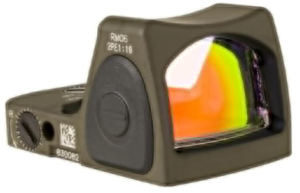 |
|
| Trijicon SRO | 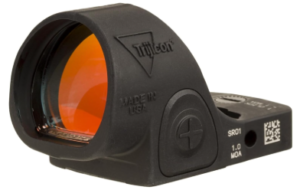 |
|
Trijicon RMR vs SRO: At a Glance
| Feature | Trijicon RMR | Trijicon SRO |
|---|---|---|
| Best For | Concealed carry & duty | Competition & range use |
| Durability | Exceptional | Very good |
| Window Size | Smaller | Much larger |
| Concealability | Better | Slightly worse |
| Weight | Lighter | Slightly heavier |
| Battery Life | Excellent | Excellent |
| Dot Acquisition | Good | Outstanding |
| Price | Usually lower | Usually higher |
| Carry Comfort | Better | Bulkier |
Choose the RMR if:
- You prioritize maximum durability
- You carry daily
- You want the safest choice for defensive use
- You care more about reliability than speed
- You need a slimmer optic profile
Choose the SRO if:
- You want the fastest target acquisition possible
- You shoot competitions or train heavily
- You value a massive field of view
- You don’t mind a slightly larger optic
- You want easier dot tracking during recoil
Trijicon RMR vs SRO for concealed carry
1) Trijicon RMR
The Trijicon RMR Type 2 is one of the most reliable pistol red dots to date, particularly for concealed carry and defensive shooting scenarios.
Has a forged 7075-T6 aluminum housing, which is specifically engineered to withstand extreme recoil, drop, impact, and abuse.
It has a unique “bat-ear” shape that deflects force from the lens, earning it a reputation for outstanding durability among law enforcement officers, military personnel, and civilians alike.
Widely trusted as the standard of performance for reliability on a carry gun since it has been extensively tested in real-world defensive scenarios.
Small footprint hardly matters, as it offers good battery life, a clear and sharp display, and good low-light performance.
The smaller window is a bit more challenging to shoot with than the larger ones, but it is nice and durable, and easy to carry around. The RMR is particularly popular for appendix carry as it is easily concealed and doesn’t add to the bulk of the handgun.
Several users also commend the RMR for zero during heavy use and rough terrain. The RMR is currently the top choice for concealed carry optics, but newer options may provide more windows or other features, which is why it will likely continue to dominate the concealed carry market. It’s still a highly recommended pistol optic for a defensive handgun, even years after its debut.
Key Specs
- Weight: 1.2 oz
- Magnification: 1x
- Battery: CR2032
- Battery Life: Up to 4 years
- Waterproof: 66 ft
- Housing Material: 7075-T6 aluminum
- Dot Sizes: 1 MOA, 3.25 MOA, 6.5 MOA
- Footprint: RMR footprint compatible
Pros
- Extremely durable and battle-tested
- Compact and easy to conceal
- Excellent battery life
- Trusted for defensive and duty use
- Strong aftermarket support
Cons
- Smaller viewing window
2) Trijicon SRO
The Trijicon SRO (Specialized Reflex Optic) has been designed to be fast, easy to see, and perform in general shooting.
SRO differs from the RMR in that it is more about providing shooters with the biggest and clearest sight picture possible than it is about durability.
Oversized circular window provides a wider field of view, which helps to locate the dot when presenting, and allows for much easier tracking when recoiling. This is a leading reason why competitive shooters or high-volume range users love the SRO.
SRO gives a more “even and gentle” shooting feel compared to the RMR. Most shooters notice quicker lock-on to targets, tracking of recoil, and faster follow-up shots almost instantly. The SRO is easier to use for beginners who are learning pistol red dots, as the large window helps to minimize the risk of the red dot being lost during fast movement.
One of the other benefits is the top-loading battery compartment; this eliminates the need to remove the optic or re-zero the handgun while changing the battery. This is a significant upgrade on previous RMR models.
The SRO has, however, disadvantages due to its larger housing. It will be bulkier, somewhat easier to spot, and not as durable for hard duty as the RMR. Most professionals still favor the RMR for optimum durability and defensive reliability, while many people still have the SRO in their pockets daily.
Key Specs
- Weight: 1.6 oz
- Magnification: 1x
- Battery: CR2032
- Battery Life: Up to 3 years
- Window Design: Large circular lens
- Dot Sizes: 1 MOA, 2.5 MOA, 5 MOA
- Top-loading battery compartment
- Footprint: RMR footprint compatible
Pros
- Massive viewing window
- Faster target acquisition
- Easier recoil tracking
- Beginner-friendly sight picture
- Convenient top-loading battery
Cons
- Less rugged than the RMR
Trijicon RMR vs SRO: Which Performs Better for Concealed Carry?
When comparing the Trijicon RMR and Trijicon SRO for concealed carry, the biggest difference comes down to one thing: durability versus shooting performance. Both optics are excellent, but they were designed with slightly different priorities in mind.
The RMR has earned a legendary reputation for toughness. It has been heavily tested on duty pistols, military sidearms, and concealed carry guns for years. Its distinctive “bat-ear” housing design isn’t just cosmetic; it helps protect the optic from impacts, drops, and rough handling.
For many concealed carriers, this matters because daily carry can be surprisingly hard on gear. Your optic may get bumped into seat belts, door frames, or hard surfaces during training. In those situations, the RMR inspires more confidence due to its battle-proven durability.
The SRO, on the other hand, was designed more for competition and performance shooting. While still durable, its larger circular window extends farther outward, making it slightly more vulnerable to impacts.
That doesn’t make it fragile, but it does explain why many professionals still prefer the RMR for defensive or duty use.
Where the SRO truly shines is in the shooting experience. Its oversized window makes the red dot much easier to find and track during recoil.
Shooters often notice faster sight acquisition, smoother follow-up shots, and better peripheral awareness. For newer red dot users, especially, the SRO can feel dramatically easier and more forgiving to shoot.
The RMR’s smaller window isn’t bad; experienced shooters adapt quickly, but side-by-side, the SRO simply feels faster and more open.
If you spend a lot of time training at the range or shooting competitively, the SRO’s larger field of view can genuinely improve performance.
Concealability is another important factor for everyday carry. The RMR’s smaller footprint makes it easier to conceal under clothing and generally more comfortable for appendix carry.
SRO’s taller housing adds a little more bulk and may print slightly more depending on your holster setup and body type. While many people successfully conceal the SRO daily, the RMR tends to disappear more easily and feels less intrusive throughout the day.
Battery life is excellent on both optics, but the SRO has a convenience advantage thanks to its top-loading battery design. This allows battery changes without removing the optic or losing zero. Older RMR models require removing the optic to access the battery compartment, which can be less convenient.
In terms of value, the RMR is usually slightly cheaper and offers incredible long-term reliability for concealed carry users. The SRO typically costs more, but many shooters believe the improved shooting experience justifies the higher price.
Best Use Cases
The RMR Is Best For:
- Daily concealed carry
- Duty guns
- Defensive pistols
- Harsh environments
- Minimal printing
- Maximum reliability
The SRO Is Best For:
- Competitive shooting
- Range training
- Fast shooting drills
- New red dot users
- Performance-focused shooters
- Hybrid range/carry setups
Frequently Asked Questions
- Is the Trijicon SRO good for concealed carry?
Yes, the Trijicon SRO can work well for concealed carry, especially if you prioritize fast target acquisition and an easier shooting experience. Its larger window makes it easier to find the dot quickly and track during recoil.
However, the SRO is slightly larger and less rugged than the RMR, which is why many everyday carriers still prefer the RMR for defensive use.
- Is the RMR more durable than the SRO?
Yes. The Trijicon RMR Type 2 is widely considered one of the most durable pistol red dots ever made. Its forged housing and patented “bat-ear” design help absorb impacts and protect the lens during hard use. Many law enforcement and military users trust the RMR for duty and concealed carry applications.
- Why do competition shooters prefer the SRO?
Competition shooters often prefer the SRO because of its massive viewing window. The larger sight picture makes the dot easier to track during recoil and allows faster transitions between targets. Many shooters find it more forgiving and easier to shoot quickly under pressure.
- Is the RMR better for everyday carry?
For most people, yes. The RMR’s smaller size, lighter profile, and exceptional durability make it one of the best optics for daily concealed carry. It conceals more easily and tends to feel more comfortable for appendix carry setups.
- Which has better battery access?
The SRO has the advantage here because it uses a top-loading battery compartment. You can replace the battery without removing the optic or re-zeroing it.
Older RMR models require removing the optic to change the battery.
Final Verdict
Both the Trijicon RMR and Trijicon SRO are high-quality pistol optics, with their strengths and weaknesses differing. For those who need the RMR for everyday concealed carry, it’s the better all-around option.
It is one of the most reliable red dots for defensive applications for its compact design, durability, and successful track record. It hides more effectively, tolerates tougher conditions, and has a long history among the police and veteran carriers.
However, the SRO provides a much more engaging shooting experience. The size of the window offers quicker target acquisition, smoother recoil, and a more forgiving sight picture, particularly for newer red dot shooters or those who play competitively.
In the end, there is no single best optic; it is the one that best fits your needs. For ultimate durability and assurance, select the RMR.
For speed, visibility, and range performance, the SRO is not to be outdone. Regardless, both red dots for the handgun are among the top handgun red dots on the market today.
Also check out: 5 Best Red Dot for Small Hands