Although it may appear simple at first, there are several factors to consider when you’re choosing a red dot sight: window size, dot size, shape, and design. Some optics promise a big window, and others provide a compact design, but which one will really matter? The size of the red dot window can affect the window’s feel and ease of finding the target, but larger isn’t necessarily better.
In this guide, we will take a close look at what the window is, why its size is important, and how small and large windows relate. We’ll also examine window size and dot size, and clarify whether a larger window equals a wider field of view, and what factors should be in the beginning student’s mind.
Last but not least, we will compare some of the most popular red dot models to see how they differ from one another before selecting the model appropriate for your needs, preferences, and budget.
“This post contains affiliate links. If you purchase through these links, I may earn a small commission at no extra cost. Learn more here.”
Red Dot Window Size: Comparing Popular Models
| Trijicon SRO | 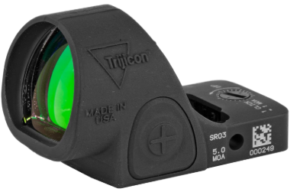 |
|
| Holosun HE507COMP | 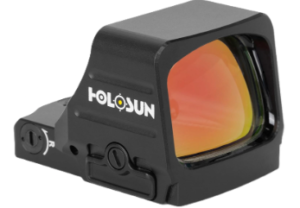 |
|
| Leupold DeltaPoint Pro | 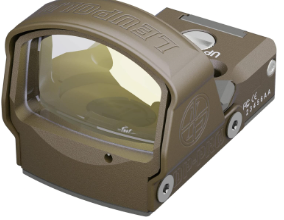 |
|
| Vortex Defender-XL | 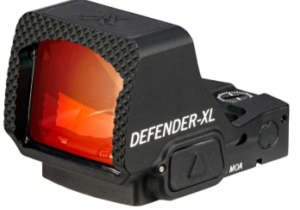 |
|
| Holosun 507C-X3 | 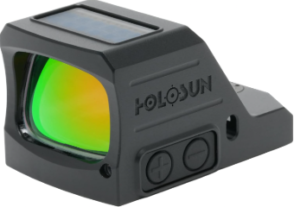 |
|
| Trijicon RMR Type 2 | 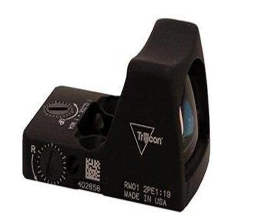 |
|
| Aimpoint ACRO P-2 | 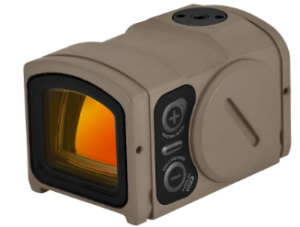 |
|
| Holosun 507C | 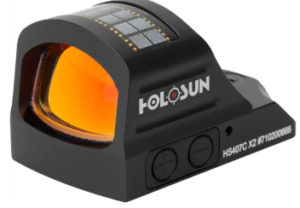 |
|
| Red Dot | Window Size | Design | Best For |
|---|---|---|---|
| Trijicon SRO | Large | Open emitter | Competition |
| Holosun HE507COMP | Very large | Open emitter | Competition/value |
| Leupold DeltaPoint Pro | Large | Open emitter | Fast acquisition |
| Vortex Defender-XL | Large | Open emitter | Competition |
| Holosun 507C-X3 | Medium | Open emitter | General use |
| Trijicon RMR Type 2 | Medium | Open emitter | Durability |
| Aimpoint ACRO P-2 | Compact square window | Enclosed emitter | Enclosed design |
| Holosun 507C | Medium | Open emitter | Value |
What Is a Red Dot Window?
The transparent area or window of a red dot sight that allows you to see the target and illuminated aiming point is called a red dot window.
A red dot, visible through the optic, seems to be positioned on the target and allows you to aim without using the front and rear sights.
The size of the window can differ between different red dot sights, with some having a smaller window and others having a larger one.
If the dot is in a larger window, it will be easier to find quickly and easier to see; a smaller window will keep the optic small and light. The size depends upon the setup and use.
How to Choose the Right Red Dot Window Size
The most important factors to consider when selecting the best red dot window size are the three of visibility, optic size, and intended application. A larger window will give more room to view and could make it easier to see the aiming point, but a smaller window will reduce the size and weight of the optic.
First, think about the use of the optic and how it’s going to be used. While a smaller window might be more practical if a compact setup is desired. A larger window might be preferable if you prefer to have a large sight picture and easy dot acquisition.
Then consider the window’s size, not the terms “big window” or “wide view.” Check out the size, footprint, and weight of various models.
Another factor to keep in mind is the size of the dots. Do not assume that a bigger window means a bigger aiming dot; assess these features individually. Consider other features like mounting options, battery life, brightness adjustment, durability, and warranty.
In the end, there isn’t a perfect window size. The best one is the one that can make your equipment fit your needs, your preferences, your budget, and your use, and makes it comfortable to view. You can compare multiple models side by side to help you make a better buying decision.
Why Does Red Dot Window Size Matter?
The size of the red dot window is important because it can impact the speed and ease with which you can get the aiming point and keep sight of the target.
If your first alignment is not quite right, you may not be able to hit the target, but if the window is larger, it may be easier to find the red dot with which to aim. Can be helpful for situations that require quick target acquisition.
However, a smaller window may result in a smaller and lighter optic. This might be better if size, weight, or mounting space is a concern.
However, there’s one more factor to consider: window size. The design, brightness and size of the dots, the mounting position and the overall quality of the optic can also impact how easy it is to use.
In the end, the optimal window size depends on the context. This is up to the specific application, firearm platform, personal preference, and balance of visibility and compactness.
Small vs. Large Red Dot Windows
| Feature | Small Window | Large Window |
|---|---|---|
| Field of view | More limited | Generally more forgiving |
| Dot acquisition | Can require more precise presentation | Often easier |
| Size/weight | Usually smaller | Usually larger |
| Concealed carry | Often advantageous | Can be less convenient |
| Competition/range use | Depends on setup | Often attractive |
When comparing small and large red dot windows, the main difference is the balance between compactness and viewing area.
A larger window generally gives the user more visual space, which can make it easier to locate the aiming point and maintain a consistent sight picture. This can be particularly useful for fast target acquisition or when the optic is mounted on a larger platform.
Smaller red dot windows offer a different advantage: they allow manufacturers to create more compact and lightweight optics.
This can be appealing when keeping the overall setup streamlined is important. However, a smaller viewing area may feel less forgiving if your initial alignment is inconsistent.
Does a Bigger Red Dot Window Mean a Bigger Field of View?
The larger the red dot window, the larger the field of view is not necessarily. Larger views provide a more open and forgiving feel to the sight picture, but field of view is also a factor of the optic, viewing angle, and position of the sight. If your eye is not perfectly in the center of the optic, a large window could help you to see the dot very quickly.
But two red dots with windows of a similar size can offer two different views. When evaluating optics, window size and overall optical design are more important than a window’s width and height.
In the end, window size is just one of the many parameters that may impact the speed and ease at which you can get to the aiming point.
Red Dot Window Size vs. Dot Size
Two different features can impact the look and performance of an optic: red dot window size and dot size.
Window: The area of sight that you use to view the target and the aiming point. A larger window could offer an open line of sight and make locating the dot easier.
The apparent size of the illuminated aiming point, typically expressed in MOA, aka minutes of angle. A smaller dot (2 MOA) can provide a more precise aim point, or a larger dot (6 MOA) can be easier to see and may be beneficial for rapid acquisition.
These two features are independent from one another. A large window doesn’t need a large dot, and a small window can have different-sized dots.
The key factors to take into consideration when selecting a red dot are the size of the window, the size of the dot, purpose of use, optic dimensions, brightness settings, and how the user likes to use it.
What Is Considered a Large Red Dot Window?
No one size fits all standard exists for the definition of a “large” red dot window. The size of windows varies greatly from one optic to another, and some manufacturers use terms like “large window,” “wide viewing area,” or “extended field of view” to name their optics.
Overall, the large window red dot offers more field of view than pistol or micro-sized red dots. That extra space could make it easier to locate the lit dot if the eye is not on axis with the optic. This may be helpful for applications where fast dot catch and an open sight picture is desired.
But the larger is not always the better. The size and weight of the optic are other factors, as the larger the window, the larger the optic and weight will be, which can be a factor when space or balance is important. Other features to evaluate include durability, lens design, dot size, brightness controls, battery life, and mounting footprint.
In the case of red dots, one should compare the actual window dimensions, and not just the marketing claims. Optics with large windows can provide a significantly different viewing area, even when advertised as such.
How Red Dot Window Shape Affects Performance
Red dot window shape can influence how an optic feels to use, particularly when acquiring the aiming point and maintaining a consistent sight picture. Some optics have more rectangular windows, while others use rounded or compact designs.
A wider window may provide more horizontal viewing space, while a taller window can offer additional vertical viewing area.
However, window shape alone does not determine an optic’s field of view or performance. Lens design, optic placement, and overall construction also play important roles.
When comparing red dots, consider the window’s actual dimensions and shape alongside dot size, brightness, durability, and mounting requirements. This gives you a more complete picture of how the optic may perform in practical use.
Does Window Size Matter for Beginners?
For a novice, window size will make a difference with a red dot, but it’s not the only factor to consider when selecting an optic.
The larger window can be more forgiving as it offers a good view to identify the aiming point when you’re learning how to present and align the shot properly.
Smaller windows can be utilized to build a more compact and lightweight window setup that may be desirable for some configurations.
Other important considerations for beginners include its dot size, brightness controls, optic durability, battery life, mounting options, and ease of use.
Don’t just take the largest window possible, but consider an optic that provides a comfortable sight picture and is suitable for the application. Even a well-designed optic that utilizes a smaller window may be a great option.
FAQs
- Does red dot window size really matter?
Yes. Window size can affect how open the sight picture feels and how easily you can locate the illuminated dot. Larger windows may feel more forgiving, while smaller windows can offer a more compact and lightweight design. However, window size is only one factor to consider when comparing red dot sights.
- Is a bigger red dot window better?
Not necessarily. A larger window can provide more visual space, but it may also increase the optic’s overall size and weight. The best window size depends on your equipment, intended application, and personal preference.
- What is considered a large red dot window?
No universally accepted measurement defines a large red dot window. Manufacturers use different designs and terminology, so comparing the actual window dimensions is more useful than relying on descriptions such as “large window” or “wide view.”
Conclusion
While red dot window size is a relevant factor in comparing optics, it should not be considered on its own. A larger window may give a bit more sight picture and make the dot acquisition seem easier, while a smaller window may have benefits in terms of compactness and weight. There’s no one correct design for all users.
For comparing red dot sights, it’s important to consider beyond the hype and marketing jargon like “large window,” the actual window size, dot size, optic footprint, weight, battery life, durability, and mounting compatibility. Also, don’t forget that window size does not necessarily mean that the field of view or accuracy of the window is determined.
In the end, the ideal red dot window size is dependent upon your specific setup, application, and personal taste.
With the knowledge of the impact of window size on the viewing experience and by carefully comparing window models, you can make a more informed choice and select a window that provides the right fit of visibility, size, features, and value.
Also check out: