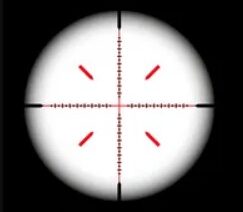

It can be confusing to decide between Open Emitter vs Enclosed Emitter for Beginners, as well as which red-dot sight to choose, particularly when you encounter terms like enclosed emitter, open emitter, etc.
Both designs offer a good aiming point, but have different construction, protection, features, and environmental suitability. If you’re new to the sport, knowing these differences before purchase can help you avoid buying an optic that isn’t right for you.
An open-emitter red dot usually has a more exposed design, making it compact, accessible, and easy to maintain. An enclosed-emitter red dot, however, shields the emitter within the housing, providing further dust, debris, and environmental protection.
Here we’ll discuss the difference between open and enclosed emitter red dots, the pros and cons of each, and some popular choices for novices. At the end, you will be better able to determine which of the designs is worthy of having in your shortlist.
“This post contains affiliate links. If you purchase through these links, I may earn a small commission at no extra cost. Learn more here.”
Best Open Emitter Red Dots for Beginners
| 1) Holosun 507C | 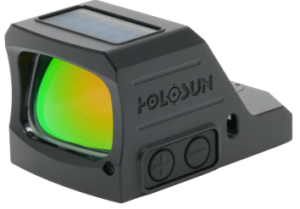 |
|
| 2) Holosun 407C | 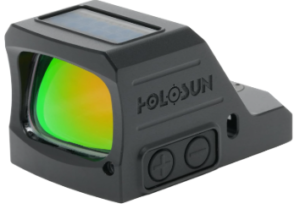 |
|
| 3) EOTech EFLX | 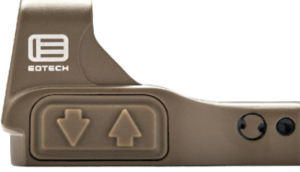 |
|
| 4) Trijicon RMR Type 2 | 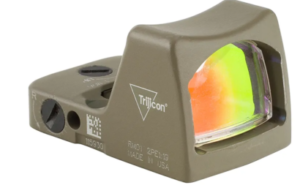 |
|
| Red Dot | Best For | Reticle | Key Features | Beginner Advantage |
|---|---|---|---|---|
| Holosun 507C | Best Overall | 2 MOA dot + 32 MOA circle | Multi-reticle system, Solar Failsafe, Shake Awake | Versatile and feature-rich |
| Holosun 407C | Best Value | 2 MOA dot | Solar Failsafe, Shake Awake, RMR footprint | Simple reticle and straightforward operation |
| EOTech EFLX | Best Large Window | 3 MOA or 6 MOA | Large viewing window, adjustable brightness | Easy-to-see aiming point |
| Trijicon RMR Type 2 | Best Premium | Multiple variants | Rugged housing, proven design, RMR footprint | Strong choice for buyers prioritizing durability |
Best Enclosed-Emitter Red Dots for Beginners
| 1) Holosun EPS | 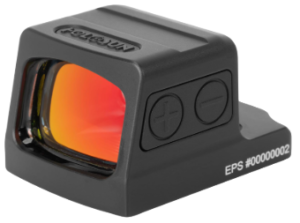 |
|
| 2) Holosun EPS Carry | 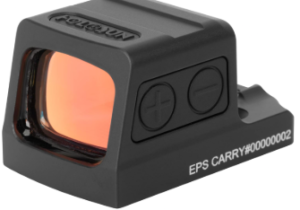 |
|
| 3) Holosun 509T X2 | 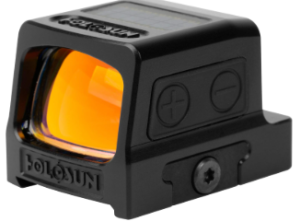 |
|
| 4) Aimpoint ACRO P-2 | 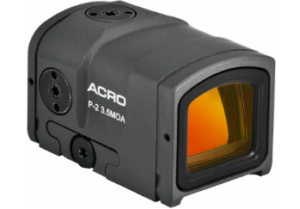 |
|
| 5) Vortex Defender ST | 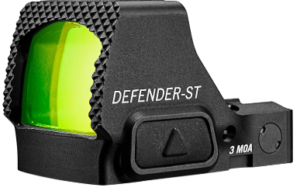 |
|
| Red Dot | Best For | Key Features | Beginner Advantage |
|---|---|---|---|
| Holosun EPS | Best Overall | Enclosed design, aspheric lens, low deck height, Shake Awake | Good balance of features, size, and usability |
| Holosun EPS Carry | Best Compact Option | Slim enclosed design, low profile, side-loading battery | Well suited to smaller setups |
| Holosun 509T X2 | Best Feature-Rich | Enclosed emitter, multi-reticle options, rugged construction | Versatile for users wanting more features |
| Aimpoint ACRO P-2 | Best Premium Option | Fully enclosed design, 3.5 MOA dot, rugged construction | Strong choice for buyers prioritizing durability |
Open Emitter vs Enclosed Emitter for Beginners: Which One Should You Choose?
Choosing between an open emitter and an enclosed emitter can be confusing for beginners. An open emitter typically offers easier access, simpler maintenance, and a more straightforward setup.
An enclosed emitter, however, provides greater protection and better control over the surrounding environment, making it appealing for certain applications and workspaces. Your ideal choice depends on your experience, available space, budget, and intended use.
In this guide, we’ll compare open and enclosed emitters, explain their main advantages and disadvantages, and highlight the key factors to consider before buying. By the end, you’ll know which option best fits your needs.
What Is an Open Emitter?
An open emitter is an emitter designed to emit or generate its output directly to the surrounding environment without a protective housing around it. This design typically facilitates easier access, inspection, cleaning, and maintenance of the emitter.
An open emitter might be appealing to beginners because of its ease of assembly and use in a simple construction. But without an enclosure, users might have to be more mindful of placement, workspace conditions, and safety requirements. When selecting an open emitter, think about where you will install it, how often you will be running it, and what other protection/environmental controls you may need to employ.
What Is an Enclosed Emitter?
An enclosed emitter is a device covered by some protective structure that helps to isolate the emitter from its environment. This design can afford better protection, enhance operating condition control, and organize the operating site.
If safety, containment, or consistent performance is a concern for beginners, an enclosed emitter might be a practical option. The enclosure can also simplify the equipment’s integration in some work environments, but may increase size, weight, cost, and maintenance.
To match the available space, application, operating conditions, maintenance requirements, and budget, select a model that meets your needs when considering an enclosed emitter.
Open Emitter vs Enclosed Emitter: Side-by-Side Comparison
| Feature | Open Emitter | Enclosed Emitter |
|---|---|---|
| Beginner friendliness | ⭐⭐⭐⭐ | ⭐⭐⭐⭐ |
| Accessibility | High | Lower |
| Environmental control | Lower | Higher |
| Maintenance | Easier | More involved |
| Workspace protection | Depends on setup | Generally better |
| Price | Often lower | Often higher |
Open vs Enclosed Emitter: Pros and Cons
Both open and enclosed emitters have advantages and disadvantages. The best choice depends on your workspace, application, budget, and how much environmental control you need.
| Type | Pros | Cons |
|---|---|---|
| Open Emitter | Easier access, simple maintenance, flexible setup, often more affordable | Less physical containment, requires careful placement, less environmental control |
| Enclosed Emitter | Better containment, more controlled environment, organized setup, added protection | Can cost more, may require more space, access and maintenance can be less convenient |
Open Emitter: Pros
- Simple and accessible design
- Easy to inspect and maintain
- Often suitable for straightforward applications
- Can be more budget-friendly
Open Emitter: Cons
- Less physical protection
- Workspace conditions may have a greater effect
- Requires careful installation and placement
Enclosed Emitter: Pros
- Provides additional physical containment
- Better control of the surrounding environment
- Suitable for applications where protection is important
- Can create a more organized workspace
Enclosed Emitter: Cons
- May have a higher purchase price
- Can require more installation space
- Maintenance access may be less convenient
Open vs Enclosed: Which One Should YOU Buy?
The decision of open or enclosed emitter is based on your priorities, experience, budget, and intended use. One design isn’t necessarily superior to the other for all. The correct answer is the one that is appropriate to your environment and use,
Choose an Open Emitter If…
If you prefer a simple design that is easy to move around and has easy access to the sight window, an open-emitter red dot may be a better choice.
Open emitters tend to be more popular with novices as they are simple to operate and available in a variety of popular models and price tiers.
They are also good-looking when space and budget are a concern. Open-emitter models like the Holosun 407C, Holosun 507C and Trijicon RMR Type 2 are popular.
An open design, however, makes the emitter and optical area more susceptible to dust, debris, moisture, and other environmental conditions. This might be a consideration if your setup is likely to have a few tough days in a row.
Choose an Enclosed Emitter If…
An enclosed-emitter red dot may be the better choice if you prioritize protection and environmental resistance.
Because the emitter is enclosed within the housing, the design helps protect the emitter from outside debris and other contaminants.
This can make enclosed models appealing for people who expect demanding conditions or simply want additional protection around the optical system. Popular examples include the Holosun EPS, EPS Carry, 509T X2, and Aimpoint ACRO P-2.
The trade-off is that enclosed models can be larger, heavier, or more expensive depending on the model.
Common Beginner Mistakes
The first time you use a red-dot sight, it can be confusing, and novices tend to make some unnecessary mistakes.
A common error is purchasing something solely because it’s cheap rather than because it’s compatible, has the features you require, and will last long.
The other is selecting an optic without verifying the mounting footprint, which can lead to compatibility issues and cause problems with the planned installation.
Another common error on the part of beginners is confusing open or closed emitters. An enclosed emitter can provide extra protection around the emitter, or an open emitter can have easy access and a compact design. Knowing these differences can make it easier for you to make an informed choice.
Another error is the lack of battery access, reticle options, window size, and adjustment controls. They can have a considerable impact on daily usability.
Lastly, don’t simply assume that the more expensive the red dot, the better the choice will be! Before purchasing, compare your requirements, intended use, cost, warranty, and manufacturer’s specifications.
By doing some research on the internet, you will be able to make sure that the optic you are purchasing is suitable for your needs and not the most popular.
FAQs
- What is the difference between an open and enclosed emitter red dot?
An open-emitter red dot has the emitter exposed, while an enclosed-emitter red dot protects the emitter inside a housing. Open designs are generally easier to access and can be compact, while enclosed designs offer greater protection from dust, debris, and environmental conditions.
- Is an enclosed emitter better for beginners?
An enclosed emitter can be an excellent choice for beginners who prioritize protection and environmental resistance. However, an open emitter may be preferable for users who want a simpler, lighter, and potentially more affordable option.
- Are open-emitter red dots reliable?
Yes. Many open-emitter red dots have proven reliable when properly installed and maintained. However, because the emitter is exposed, users should consider the environment in which the optic will be used.
- What are the advantages of an enclosed-emitter red dot?
The main advantage is protection. The enclosed housing helps shield the emitter from dust, dirt, moisture, and other debris. This can make enclosed designs attractive for demanding environments.
Final Thoughts
Choosing between an open and enclosed emitter red dot ultimately comes down to your priorities rather than simply choosing the most expensive or popular model.
Open emitters can be attractive to beginners who value a compact design, easy access, straightforward maintenance, and potentially lower cost.
Enclosed emitters, meanwhile, offer additional protection around the emitter and can be particularly appealing when environmental resistance is a priority.
Before making your decision, consider your intended application, compatibility requirements, mounting footprint, size, battery system, reticle options, budget, and warranty. Don’t forget to compare the manufacturer’s specifications rather than relying solely on online reviews or popularity.
Whether you choose an open or enclosed design, the best red dot is the one that fits your specific needs and setup. Take your time, compare your options carefully, and choose based on function, compatibility, reliability, and value rather than marketing alone.
Also check out: