If you’re going to use a red dot sight, there’s a significant difference in how quickly and clearly you can see your reticle outside of the office.
Dimming the dot might be hard to see in bright light, bright reflective surfaces and light backgrounds can make the reticle seem bigger, and excessive brightness can cause the reticle to be distracting from the target. It is important, then, to find the right balance for having a clear sight picture.
Fortunately, most modern red dot sights have plenty of illumination settings so that you can tweak the reticle setting to match lighting conditions. Many models also have auto brightness or solar assistance for ease of use.
In this guide, we’ll detail what brightness setting to use during the day, how bright a red dot should be at 100 yards, and why your reticle may be hard to see in bright conditions. There will also be a discussion of some of the key features to look for in a red dot for daytime shooting.
“This post contains affiliate links. If you purchase through these links, I may earn a small commission at no extra cost. Learn more here.”
Red Dot Sight Brightness for Daylight
The setting for the red dot brightness is optimal for the amount of ambient light around you. When using the scope on the outside, a medium setting is usually a good default, since the reticle should not be too bright to cause an unnecessary glare or be too bright that it looks too large.
Shooting directly in the Sun’s rays might require brightening in order to see the sighting point properly. Decreasing brightness can help clear the sight picture in areas of shade.
The idea is to NOT use the brightest setting, but to use the dimmest setting that allows you to see the dot adequately against your subject and background.
What Brightness Setting Should You Use for a Red Dot in Daylight?
Red dots can sometimes be harder to see in bright sunlight, especially if the optic is set to a dim setting. Under such lighting, it is generally a good idea to use a higher brightness setting as it will make the reticle more noticeable against a bright background.
But it’s not always a must have. If the dot is too bright, it may look larger or not well defined, making it harder to aim precisely.
First adjust the light until the dot is bright and clearly seen and distinguishable from the target, and then gradually adjust the light level up and down.
A red dot with a number of brightness options that can be adjusted in the daylight will provide greater flexibility when lighting levels vary during the day.
Best Red Dot Sights for Daylight Shooting
| Aimpoint Micro T-2 — Best Overall for Daylight | 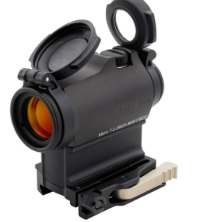 |
|
| Holosun HS510C — Best Solar-Assisted Option | 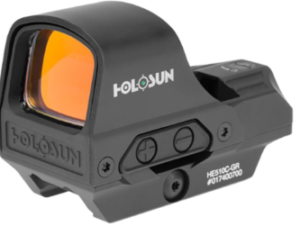 |
|
| Trijicon MRO — Best for a Large Viewing Experience | 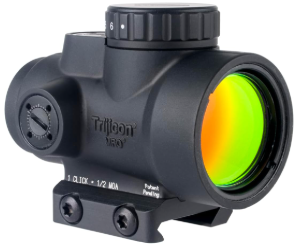 |
|
| Holosun EPS — Best Compact Option | 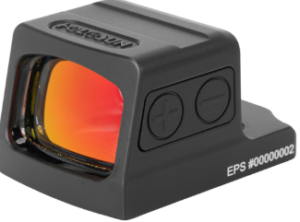 |
|
| Trijicon SRO — Best for Competition | 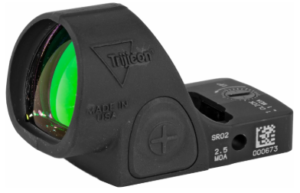 |
|
1. Aimpoint Micro T-2 — Best Overall for Daylight
Check Price on Amazon & Check Price on Opticsplanet
The Aimpoint Micro T-2 is an excellent choice for shooters who want a red dot that remains easy to see in bright outdoor conditions.
Its adjustable brightness settings allow users to increase illumination when shooting under strong sunlight and lower it when moving into shaded areas.
The crisp 2 MOA dot provides a useful balance between visibility and precision, while the optic’s compact design makes it suitable for rifles and other lightweight setups.
Another major advantage is its impressive battery life, which makes it practical for users who prefer to keep their optic ready for extended periods.
Its rugged construction also gives it a reputation for handling demanding outdoor use. For anyone looking for a dependable combination of daylight visibility, durability, and battery performance, the Micro T-2 is a strong overall option.
Key Specs:
- Reticle: 2 MOA red dot
- Brightness: Multiple adjustable settings
- Battery: Long battery life
- Design: Compact and rugged
- Best for: General daylight and outdoor shooting
Pros:
- Excellent daylight visibility
- Long battery life
- Durable construction
- Compact and lightweight
Cons:
- Premium price
- May be more optic than some casual users need
2. Holosun HS510C — Best Solar-Assisted Option
Check Price on Amazon & Check Price on Opticsplanet
The Holosun HS510C is particularly appealing to shooters who want flexible illumination options for changing daylight conditions.
Its combination of adjustable brightness settings and solar-assisted power can help keep the reticle visible when shooting outdoors.
Open-style design provides a wide viewing window, making it easier to find the dot quickly and maintain situational awareness.
Users can adjust the brightness depending on whether they are shooting under direct sunlight, partly cloudy conditions, or in a shaded environment.
HS510C also offers a versatile reticle system, allowing users to select a configuration that suits their preferences.
Key Specs:
- Reticle: Multi-reticle system
- Brightness: Multiple illumination settings
- Power: Battery and solar-assisted operation
- Design: Open reflex style
- Best for: Daylight and fast target acquisition
Pros:
- Excellent daylight visibility
- Solar-assisted power
- Wide viewing window
- Flexible reticle options
Cons:
- Open design provides less protection around the emitter
- Larger than some compact pistol optics
3. Trijicon MRO — Best for a Large Viewing Experience
Check Price on Amazon & Check Price on Opticsplanet
The Trijicon MRO is a compact red dot designed around a large viewing experience, making it an interesting choice for daylight shooting.
Its generous viewing area can make it easier to locate the illuminated reticle quickly, particularly when shooting with both eyes open.
Multiple brightness settings allow the user to adjust the dot according to the surrounding light, which is especially useful when moving between bright and shaded environments.
Optic is also built with durability in mind, making it suitable for users who expect their red dot to handle regular outdoor use.
Its combination of a clear sight picture, adjustable illumination, and rugged construction makes the MRO a strong candidate for rifles and carbines.
If your priority is a bright, easy-to-find reticle combined with a broad viewing experience, the MRO deserves consideration.
Key Specs:
- Reticle: 2 MOA dot
- Brightness: Adjustable illumination
- Design: Compact tube-style optic
- Viewing: Large sight picture
- Best for: Rifles and outdoor daylight shooting
Pros:
- Large viewing experience
- Good daylight visibility
- Rugged construction
- Easy brightness adjustment
Cons:
- Larger than micro-style pistol optics
- Premium price range
4. Holosun EPS — Best Compact Option
Check Price on Amazon & Check Price on Opticsplanet
The Holosun EPS is a compact enclosed-emitter red dot that works particularly well for users who want a small optic without giving up useful brightness adjustment.
Its enclosed design helps protect the emitter from environmental elements, while adjustable illumination makes it easier to adapt the reticle to different daylight conditions.
When shooting in bright sunlight, increasing the brightness can help maintain a visible aiming point, while lower settings can be more comfortable in shaded conditions.
Compact footprint also makes the EPS especially attractive for modern pistol setups where size and weight matter.
For an article targeting red dot sight brightness for daylight, the EPS provides a good example of how a compact optic can still offer strong illumination flexibility.
It is a practical option for users who want a balance between daylight visibility, compactness, and durability.
Key Specs:
- Reticle: Available in different reticle configurations
- Brightness: Multiple adjustable settings
- Design: Enclosed emitter
- Best for: Compact pistols and everyday use
Pros:
- Compact design
- Enclosed emitter
- Good brightness adjustment
- Strong daylight performance
Cons:
- Smaller viewing window than some larger optics
- Pistol-focused design may not suit every setup
5. Trijicon SRO — Best for Competition
Check Price on Amazon & Check Price on Opticsplanet
The Trijicon SRO is designed with speed and visibility in mind, making it a particularly attractive option for competition-oriented shooters.
Its large, unobstructed viewing window makes it easier to locate the illuminated dot quickly, while adjustable brightness allows users to tune the reticle for different daylight conditions.
In bright outdoor environments, the brightness can be increased to maintain a clearly visible aiming point, while lower settings may be more comfortable when shooting in less intense light. The SRO also has a distinctive round window and a design optimized for pistol applications.
For shooters who prioritize rapid target acquisition and a highly visible reticle, the SRO can be an excellent choice.
It is especially worth considering for competitive setups where speed, visibility, and a generous sight picture are important.
Key Specs:
- Reticle: Available in multiple MOA options
- Brightness: Adjustable illumination
- Window: Large viewing window
- Design: Pistol-oriented reflex optic
- Best for: Competition and fast shooting
Pros:
- Large viewing window
- Excellent reticle visibility
- Multiple brightness settings
- Well suited to competition
Cons:
- Premium price
- Larger footprint than some compact pistol optics
What Is the Best Red Dot Brightness for Bright Sunlight?
Bright sunlight can make a red dot more difficult to see, particularly when the optic is set too dim. In these conditions, a higher brightness setting is generally useful because it helps the reticle stand out against brightly illuminated backgrounds.
However, maximum brightness is not always necessary. An excessively bright dot can appear larger or less defined, which may make precise aiming more difficult.
Start by increasing the brightness until the dot is clearly visible and easy to distinguish from the target. A red dot with several daylight-compatible brightness settings gives you more flexibility when lighting conditions change throughout the day.
How Bright Should a Red Dot Be at 100 Yards?
At 100 yards, the appropriate red dot brightness depends more on the surrounding lighting than the distance itself. In bright daylight, a medium-to-high setting may help the reticle remain clearly visible against the target and background.
However, using excessive brightness can make the dot appear larger and potentially obscure small targets. A lower setting may provide a cleaner aiming point when conditions are cloudy or shaded.
The key is to select a brightness level that allows you to see the reticle immediately without overwhelming your target.
For 100-yard shooting, adjustable brightness is particularly valuable because outdoor lighting can change considerably.
Why Is My Red Dot Hard to See in Daylight?
There are several reasons why a red dot is not easily visible in the daylight. The most frequent one is that the brightness is set too low in the surrounding light.
When taken in direct sunlight or in a bright background, the reticle can be hard to see or even harder to see, which can make it more difficult to use.
Other issues that may impact visibility include dirty lens, low battery or incorrect brightness setting. Experimentally adjust the amount of light until the dot can be seen but not overly large or blurry. If the problem persists, inspects the lens and battery of the optic.
It is much easier to keep the reticle visible when outdoors if you select a red dot that has multiple daylight compatible brightness settings.
Red Dot Brightness vs. Target Visibility
Red dot brightness should complement and not compete with target visibility. If the reticle is too bright, it may appear larger and cover part of the target and if the reticle is not bright enough, it can be difficult to see in a bright background.
The best point will be clearly visible and will still provide a good view of the target. The optimum brightness depends on the lighting, target color, distance, and background. That is where the adjustable illumination is a handy option.
Don’t use “Max Brightness” as this is not always the best setting; experiment with the reticle angle so you can see it clearly without making a sight picture difficult to use.
What Features Should You Look for in a Red Dot for Daylight?
When choosing a red dot for daylight use, prioritize features that help keep the reticle visible in changing outdoor conditions.
Multiple brightness settings are important because they allow you to adjust illumination for cloudy conditions, normal daylight, and bright sunlight.
A strong daylight-visible setting is particularly useful for outdoor shooting. Clear optical glass and good contrast can also improve the overall sight picture.
Long battery life is another valuable feature, especially for users who keep their optic ready for extended periods.
Some models also offer automatic brightness adjustment or solar-assisted power. A durable construction is beneficial for anyone regularly using their optic outdoors.
Red Dot Brightness Settings for Different Lighting Conditions
Depending on the lighting conditions, there are different brightness settings for the red dot. However, in low light or highly shaded conditions a lower setting will give a cleaner, more comfortable reticle.
Medium brightness is a good starting point if it’s cloudy or overcast. Depending on the level of natural light, a medium to high setting is needed, and for direct sunlight a higher setting is necessary to maintain visibility of the dot.
Adjusting the brightness can help keep the brightness even when moving between bright and shaded areas. The best way is to look at the reticle and compare it to the actual target and background and make small adjustments. These changes are much easier to make when they have a red dot with multiple brightness levels.
FAQs
- What is the best red dot brightness setting for daylight?
A medium to high brightness setting is usually a good starting point for daylight. In direct sunlight, you may need to increase the brightness so the reticle remains clearly visible.
- Should I use maximum brightness in bright sunlight?
Not necessarily. Use the lowest brightness that keeps the dot clearly visible. Maximum brightness can sometimes make the dot appear larger and may reduce aiming clarity.
- Why can’t I see my red dot in bright daylight?
The brightness may be too low for the surrounding light. Increase the illumination gradually and check that the lens is clean and the battery has sufficient power.
Conclusion
The key to the red dot sight brightness in daylight is to determine the correct brightness of the reticle without overpowering the situation.
Medium light might be required for normal daylight, and higher light if there is a strong direct sunlight. Brightest is not necessarily the best, though. The appearance of the reticle may be altered by your target, background, distance and surrounding lighting.
Multiple brightness settings offer the versatility to make quick adjustments when the situation changes for a quality red dot.
Long battery life, clarity in the glass, high daylight visibility and auto/ solar illumination can be some of the nicer features.
In picking out an optic, look for one that gives you a clear, visible line of sight on your target and an optic that offers a crisp reticle.
Daylight shooting can be easier, more predictable and accurate with the proper brightness setting and the right red dot.
Also check out: