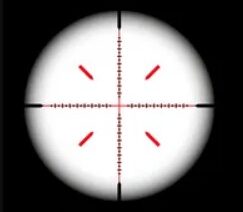
If you’ve ever looked through a red dot sight and noticed that it appears to move when you shift your head, you’ve probably encountered parallax. While the term may sound complicated, red dot parallax is actually quite simple to understand.
It refers to the apparent movement of the aiming dot in relation to the target when your eye position changes behind the optic. Most modern red dot sights are designed to minimize this effect.
However, that doesn’t necessarily mean there is absolutely zero parallax at every distance or viewing angle. Understanding how parallax works can help you make better decisions when comparing different red dot sights.
In this guide, we’ll explain red dot parallax in simple terms, look at why the dot appears to move, discuss whether parallax really matters, suggest best red dots and cover what to consider when choosing a red dot sight.
“This post contains affiliate links. If you purchase through these links, I may earn a small commission at no extra cost. Learn more here.”
What Is Red Dot Parallax?
Appearing movement of a red dot with respect to its target upon movement of the eye or head behind the sight is known as red dot parallax. If the eye is not in the same position, the dot might seem to move across the target, even if the sight hasn’t moved.
Many current red dot sights are designed to be used at a certain distance with no parallax or with very low parallax. Note that the term “parallax-free” doesn’t imply that there is no parallax at any distance or viewing position!
Parallax is typically not a problem for most users, particularly at normal short and medium range distances, with the use of a good red dot.
Red Dot Parallax Explained Simply
Red dot parallax is the apparent movement of the red dot against the target when you move your eye or head behind the sight. In simple terms, the dot may appear to shift even though the sight itself has not moved.
Most modern red dot sights are designed to have very low parallax, often described as parallax-free. However, this does not always mean zero parallax at every distance or viewing angle.
For most users, especially at typical distances, the effect is small. Understanding red dot parallax can help you choose a suitable sight and better understand its specifications, optical performance, and limitations.
Red Dot Sights With Low Parallax
| SIG Sauer Romeo5 | 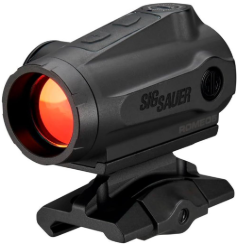 |
|
| Holosun HS403B | 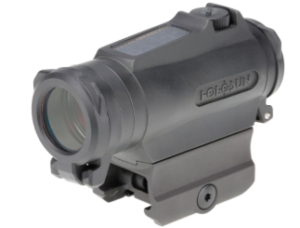 |
|
| Vortex Crossfire Red Dot | 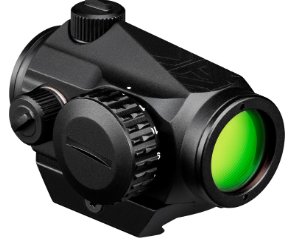 |
|
| Primary Arms SLx MD-25 | 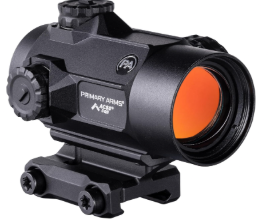 |
|
| Aimpoint PRO | 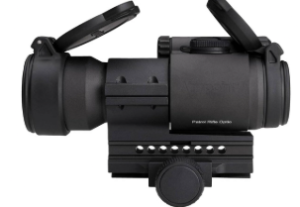 |
|
| Aimpoint Micro T-2 | 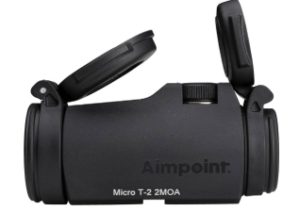 |
|
| Trijicon RMR Type 2 | 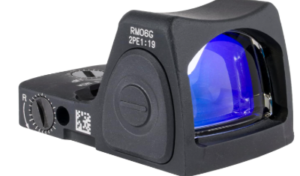 |
|
| Aimpoint ACRO P-2 | 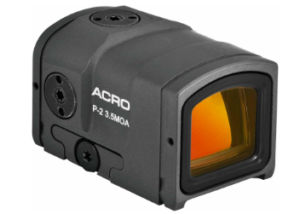 |
|
Red Dot Sights Comparison
| Red Dot Sight | Best For | Price Tier | Key Advantage | Parallax Focus |
|---|---|---|---|---|
| SIG Sauer ROMEO5 | Best overall value | Budget | Good balance of features and price | Low parallax |
| Holosun HS403B | Budget buyers | Budget | Long battery life and compact design | Low parallax |
| Vortex Crossfire Red Dot | Beginners | Budget | Simple and affordable | Low parallax |
| Primary Arms SLx MD-25 | Larger viewing window | Mid-range | Wider sight picture | Low parallax |
| Aimpoint PRO | Premium durability | Premium | Rugged construction and reliability | Minimal parallax |
| Aimpoint Micro T-2 | Premium compact setup | Premium | Excellent optical quality and durability | Minimal parallax |
| Trijicon RMR Type 2 | Compact applications | Premium | Proven compact design | Minimal parallax |
| Aimpoint ACRO P-2 | Enclosed-emitter design | Premium | Durable enclosed housing | Minimal parallax |
How Does Parallax Affect a Red Dot Sight?
When the eye position changes behind the sight the red dot may seem to move with regard to the target because of parallax.
This does not necessarily mean that the dot will always be in line with the same spot when you look at it through the optic. The effect is typically most pronounced at a given distance or at an angle.
Modern red dot sights are parallax corrected and most come with a specified range that states they are parallax free.
If your head position is not ideally aligned, low parallax aids in aiming and helps maintain a consistent sight picture, which is helpful for most typical uses.
Are Red Dot Sights Really Parallax-Free?
Not completely. Most modern red dot sights are designed to have very low parallax, but “parallax-free” does not usually mean there is zero parallax at every distance or from every viewing angle.
The amount of parallax can vary depending on the optic’s design, distance, and your eye position. Higher-quality red dots generally do a better job of minimizing the effect.
For most users, the remaining parallax is small enough that it may not be a major concern. When comparing red dot sights, look beyond the “parallax-free” label and consider the manufacturer’s stated specifications, optical quality, durability, dot clarity, and intended use.
At What Distance Are Red Dot Sights Parallax-Free?
There is no single distance where all red dot sighting is perfectly parallax free. The majority of modern red dots will have very little parallax at the typical operating distance, but the level of this will vary depending on the optic and the manufacturer.
Some models might be able to indicate a specific distance, and others have been created to maintain a minimal parallax over a wide range.
Also, keep in mind that the term parallax-free does not necessarily imply that the shift should be zero. Always make sure to factor in the manufacturer’s declaration of parallax capabilities and distance of the red dot when considering its selection. This can be useful to help you choose an optic that is right for you.
Why Does My Red Dot Move When I Move My Head
If your red dot appears to move when you move your head, it is usually related to parallax and your changing viewing angle through the optic. The sight may remain stationary, while the dot appears to shift relative to the target.
This effect can be more noticeable when your eye is positioned off-center or when viewing the optic from different angles. Most modern red dot sights are designed to minimize this movement, but no optic should automatically be assumed to have zero parallax in every situation.
If you notice significant movement, check the manufacturer’s specifications and make sure the sight is properly mounted and functioning as intended.
How to Check Red Dot Parallax
Red dot parallax is verified by positioning the sight through the alignment with the target without moving the sight itself.
Slowly turn head or eye to one side and then the other and up and down without moving the position of the sight. Note if the red dot seems to move against the target or not.
Routine may be normal if there is a small amount of apparent movement and with some optics, viewing angles etc.
Do not presume that if the sight moves, it has a problem, but compare with the manufacturer’s specifications. If the movement is excessive, check the mounting and follow the manufacturer’s instructions before making any conclusions about the performance of the optic.
Frequently Asked Questions
- What is parallax on a red dot sight?
Parallax is the apparent movement of the red dot relative to the target when your eye or head position changes behind the sight.
- Are red dot sights really parallax-free?
Most modern red dot sights are designed to minimize parallax, but “parallax-free” does not necessarily mean zero parallax at every distance and viewing angle.
- Does red dot parallax affect accuracy?
It can, particularly when precision is important. However, quality red dot sights are designed to keep parallax very low under normal viewing conditions.
Final Thoughts
Understanding red dot parallax doesn’t have to be complicated. In simple terms, it describes the apparent movement of the dot relative to the target when your viewing position changes.
Modern sights are engineered to keep this effect very small, but “parallax-free” should not automatically be interpreted as absolutely zero parallax in every situation.
When choosing a red dot, it’s therefore worth looking beyond the label and considering the manufacturer’s specifications, optical quality, durability, dot clarity, battery life, and overall design. The right choice ultimately depends on your intended application and budget.
By understanding parallax and knowing what features to compare, you can narrow down your options with greater confidence.
Whether you’re considering a budget-friendly model or a premium optic, a basic understanding of parallax can help you make a more informed purchasing decision.
Also check Out: